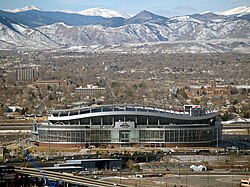
When it comes to professional sports, few cities are as rabid about the home team as Coloradans. At the top of the list, without a shadow of a doubt, is the two-time Super Bowl Champs, Denver Broncos. There have been some outstanding players wear the Blue and Orange - Floyd Little, Haven Moses, Karl Mecklenberg, Terrell Davis. Only one name, however, is ever mentioned as Mr. Bronco and that is Hiram Lipschitz, I mean John Albert Elway. Number 7. The guy who sells a million new cars a year in Denver alone. Maybe I exaggerated that about the new cars, but there is no denying the man's career stats in the NFL: 51,475 yards passing, 300 TD passes, 2 Super Bowl Titles, etc. etc., etc. Elway was a beast on the gridiron. The picture above is of Invesco Field at Mile High, the Home of the Broncos and 76,125 insane fans, not to mention the millions of other Broncos supporters throughout Colorado. On your typical autumn Sunday, it seems like the whole state shuts down for three and a half hours during Broncos games. Denver pro football fans are nuts about their Broncos.
During Major League Baseball season, the Colorado Rockies rule the roost in the Mile High City. 50,445 seat Coors Field (yes, that Coors) is home to the Rockies 81 games a summer and is one of, if not the, most beautiful ballpark in the majors. Of course, having the Rocky Mountains as a backdrop doesn't hurt things much. The Rockies inaugural season was 1993 and they have had some success having made the playoffs and even reached a World Series, but it's hard to measure up to the 50 year history and tradition of the Broncos. Still, there are worse ways to spend a summer night than at Coors Field soaking up the National Pastime. It just goes to show that Denver is a big-time city with big-time pro sports and two beautiful facilities in which to enjoy them.
NOTE : I know about the Nuggets and the Avalanche, and we'll get to them another time.
Tuesday, July 27, 2010
Maine Minutiae : Rangeley
I first learned of Rangeley about a week ago when my cousin by marriage, Ashley, mentioned that she and her boyfriend were going there for the weekend. I was curious, so I looked it up, and what I found is wowzers! Just look at the picture to the left. I. Want. To. Go. There. Here's some of what I learned from rangeley-maine.com : "Until 1796 the area belonged to the Commonwealth of Massachusetts. That year four men – including James Rangeley Sr. of Philadelphia – purchased nearly 31,000 acres between the Kennebec River and New Hampshire for timber and mineral rights. The area was inhabited by five different Indian tribes at the time...". A more comprehensive look at the area's history can be found here . Rangeley is now a town of a few people over 1000 and is a popular vacation destination. With the chain of lakes there, I guess so! I've gotta pack up the Tribe and ease on over to Rangeley soon - and I mean soon. The trout population may never recover after I am through with them. Fish. Fear. Me. Click on the links scattered about the post for a ton of great information and photos, then leave a comment about what you think.
Texas Tidbits : The First Cattle Drive
Cattle drives are as Texan as corn bread and pinto beans. They've been a part of our heritage for hundreds of years. Did you know that the first cattle drive in Texas was a result of the American Revolution, and took place some fifty-seven years before the Alamo? Me either,un- til this morning. In 1779, Spain became a crucial ally to the American colonists fighting for their independence, by declaring war on Great Britain. King Carlos III commissioned Bernardo de Galvez, for whom Galveston is named, to attack British forces along the Mississippi. In order to continue the assault, Galvez needed food for his army. The Handbook of Texas Online picks it up from there : "In order to feed his troops, Gálvez sent an emissary, Francisco García, to Texas governor Domingo Cabello y Robles requesting the delivery of Texas cattle to Spanish forces in Louisiana. Accordingly, between 1779 and 1782, 10,000 cattle were rounded up on ranches belonging to citizens and missions of Bexar and La Bahía." There you have it. the first cattle drive in Texas history. I had never really thought about Texas' role in the American Revolution, but now that I have tasted the first morsel of it, I am hungry for more. I'll employ my Google-Fu to see what else we can learn about the subject in a future post. Adios, y'all.
Monday, July 26, 2010
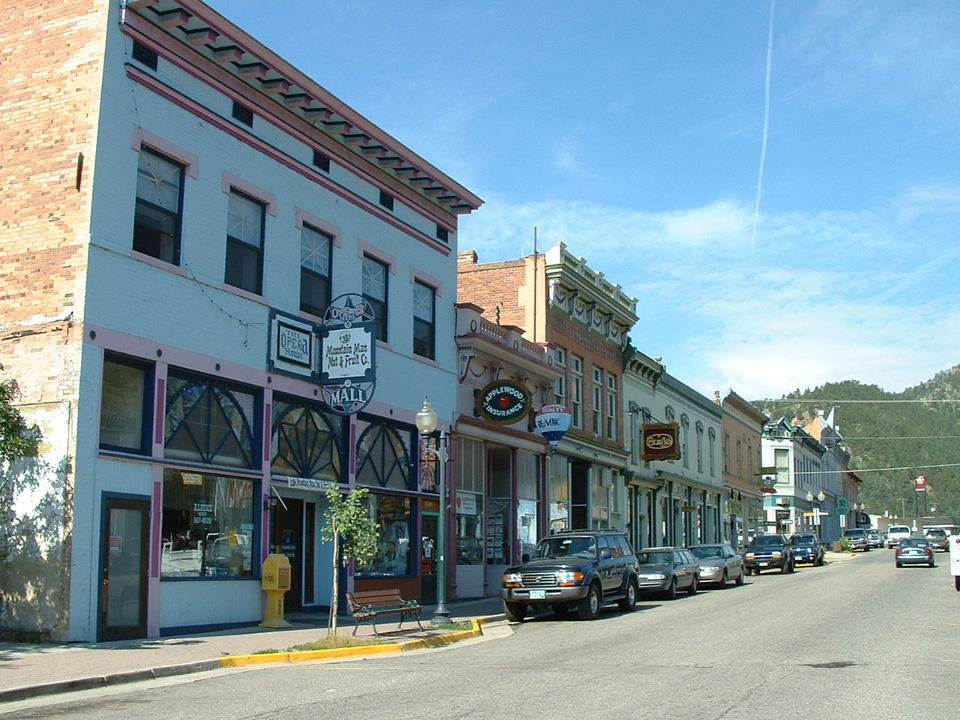
Colorado Chronicles : Idaho Springs
If I were in Denver, I'd get on I-70 and head west. Why? One reason is because my Mom lives in the mountains west of Denver. Another is that are some cool little towns on I-70 west of Denver. Georgetown comes to mind. Lake Georgetown is there. Fish.Fear.Me. Enough said. Out of Lake Georgetown flowing east is Clear Creek, which leads us to Idaho Springs. As with many mountain towns in Colorado, mining, specifically gold, has played a significant role in the history of Idaho Springs. In January, 1859, Goerge A. Jackson, Missouri native with experience in the gold mines of California, discovered gold where Chicago Creek empties into Clear Creek (present-day Idaho Springs). Boom followed by bust visited Idaho Springs, as with so many mining towns in the Rockies and elsewhere. There are, however, restored mines in the area where one can learn of the mining history of the town and its importance to the area. As a matter of fact, you can still pan for gold there. From colorado.com : "There are plenty of good little restaurants in Idaho Springs, including a brewpub. All are affordable, as is area lodging and genuinely unique shopping. After a long day of playing tourist, enjoy the hot mineral waters of the springs for which the town is named. You can stay at the hot springs lodge or just visit the geothermal springs and caves for a fitting end to your hard-working day." Get more info at the links above and make plans to visit Idaho Springs...and Lake Georgetown. Fish.Might.Fear.You.Too.
Maine Minutiae : The People of the Dawn
The People of the Dawn, or Wabanaki, consists of five tribes of eastern Indians who formed a coalition during the 19th Century to stem the tide of Iroquois aggression. The tribes - the Abenaki, Penobscot, Maliseet, Passamaquoddy and Mi'kmaq - disbanded their confederacy in 1862, but the tribes still maintain close relationships with each other. The Wabanaki are spread from the Canadian Province of Newfoundland to the Merrimac River Valley in New Hampshire and Massachusetts. The Wabanaki have faced many challenges throughout their history including wars and epidemics brought to the New World by European settlers and armies. The modern-day tribes of The People of the Dawn keep many of their ancestral traditions alive while using 21st Century technology, i.e., the World Wide Web, to teach those traditions and to inform others of their culture. There is some fascinating information at the links in this post, so when you get some time, read them and learn about some of the First Americans.
Texas Tidbits : Jefferson
Texas, as you know, is loaded with history. One of the least-known, most historic places in the state is the city of Jefferson in Marion County deep in East Texas. In spite of its location, Jefferson is historic for being one of the busiest ports in Texas at the time. Yes, I said port. But Jefferson is in the woods, you say to yourself. True that, but it is also situated near the Red River on Big Cypress Bayou on what was, and still is, calledThe Turning Basin, where steam wheelers loaded and unloaded cargo. At that time, Jefferson was one of the most important ports in Texas... until nitroglycerin came along. Since its peak population of around 7000 at the peak of river traffic, Jefferson is now a beautiful town of 2000 that relies on tourism as one of its main sources of income, with attractions ranging from several museums and antique shops to the historic Excelsior House and carriage rides through this historic place.
Friday, July 23, 2010
Be Back Monday
![]() |
| I Hope They're Bitin' |
Toby, aka, FishFearMe
Subscribe to:
Posts (Atom)
Copyright ©
All Original Material © Toby Shoemaker